

Due diligence is an important part of any business acquisition. It helps ensure that the deal you’re making is a sound decision, that you are relying on correct assumptions, and protects you from potential risks down the road.
But performing adequate due diligence isn’t always easy. It requires the requisite effort, reasonable care, the knowledge of what information to look for and how to interpret it correctly, and of course, time. It’s a painstaking process.
Having bought and integrated companies ourselves, we know the importance of good communication amongst all involved in the deal to minimize disruption during the diligence period. We’ve seen firsthand how a disjointed diligence process can increase the risk level for your deal team and your organization.
If you’re looking to purchase a business or take on a new partner, this guide will walk you through the business acquisition due diligence process and help ensure your decision is logic-based, not emotionally driven.
At JACO Advisory Group, we encourage clients to avoid a cookie-cutter approach. We believe you should customize the diligence process to fit the unique aspects of the deal being contemplated.
Types of Due Diligence
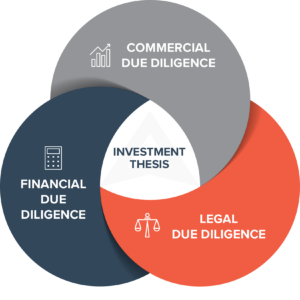
When we work with clients, we break the diligence process down into three broad categories: commercial, legal, and financial.
Assessing the target company in these three areas allows you, as the acquiring firm, to assess the past, present, and future performance of the business, ultimately helping you determine if the acquisition is worth pursuing.
Type #1: Commercial Due Diligence (CDD)
This part of the diligence process is an all-encompassing review of the business. It looks at how a company does business and who it does business with—both internally and externally—analyzing the past, present, and future performance of the target company.
Type #2: Financial Due Diligence (FDD)
This part of the diligence process focuses on the financial performance of the business. Examining the target company’s P&L, balance sheet, and free cash flow helps ground your analysis with confident assumptions on the business’s future capacity for growth.
Type #3: Legal Due Diligence (LDD)
This part of the diligence process focuses on any legal and tax complications you need to be aware of. A deep understanding of the target’s past experiences and circumstances—as well as that of the broader industry—helps account for future potential risks.
Who’s Responsible for Synthesizing All the Data?
JACO recommends identifying one to two people responsible for gathering all the data from the various members of the deal team and synthesizing it into one master document. This enables all members of the deal team to understand the deal from different vantage points, reduces duplication of efforts, and allows the team to connect the dots much more efficiently.
How Long Is the Due Diligence Period?
While the complexity of the deal often dictates the length of time needed, the due diligence process typically takes about 60 to 90 days. With our streamlined process, JACO likes to target completing the diligence process in 30 to 60 days.
Due Diligence Checklist for Business Acquisition
Leveraging our proprietary protocols, JACO uses an extensive due diligence checklist for business acquisition to ensure nothing gets missed. Here’s what it covers:
- Defining the diligence requirements and scope of the investigation
- Gathering relevant documents and information
- Analyzing financial records
- Assessing legal compliance and risk exposure
- Evaluating management, the business plan, and operations strategy
- Understanding the marketplace
- Reviewing customer contracts and agreements
- Investigating liabilities and hidden risks
- Performing background checks on key employees
- Understanding cultural alignment
- Creating a comprehensive report of findings
1. Define the Scope of Your Due Diligence
Before starting the diligence process, it’s important to have a clear understanding of the investment thesis for the deal, a summary that outlines the assumptions of the acquiring company as to why they are doing this deal. This is an often-overlooked step, even by seasoned deal makers.
Having a defined investment thesis will help define the scope of the due diligence to be performed and will serve as the standard by which you compare your findings to assess risk, valuation multiples, and purchase price. Don’t forget to test the thesis by performing a proforma shareholder value analysis—a logic check to ensure your anticipated return is reasonable.
Due diligence aims to identify any potential risks, issues, or red flags that could impact the value or success of the deal. We also recommend evaluating downside risk early: if your investment thesis is wrong, what is your exposure? Understanding your exit options before investing is always prudent.
Integration Plan
As you progress through the due diligence process, don’t lose sight of developing an integration plan. Many good business transactions have failed to meet expectations because the integration plan was overlooked during diligence. As a best practice, we believe an integration plan should be developed in parallel with the due diligence process.
2. Gather Relevant Documents and Information
The goal of diligence is to focus on both the seen and unseen aspects of the business. Some organizations use diligence software, while others use sophisticated spreadsheet checklists—whatever your preference, the key is having a defined process. We encourage our clients to dig deep and look at every aspect of the business, including:
- Financial statements
- Contracts, licenses, and permits
- Regulatory compliance
- Customer and vendor relationships
- Human resources
- Supply chain resiliency
- Intellectual property
- Information technology policies and procedures
- Pending litigation
- EHS (environmental, health & safety) policies and records
- Financial transaction history and tax
The due diligence process can be time-consuming and overwhelming, which is why businesses of all sizes, private equity firms, family offices, and individual investors utilize professional advisors to manage it. A good due diligence process is worth the investment—otherwise, you might end up taking on more risk than you planned.
3. Analyze Financial Statements and Records
Analyzing financial statements and records is a crucial task in any due diligence investigation. Examination of the balance sheets, income statement, and statement of cash flows will provide you with a starting point for your due diligence report.
By taking a closer look at audited and unaudited financial statements, you can identify trends, strengths, and weaknesses of the company. If the company you are looking at has not been through a recent financial audit, you need to investigate why. We recommend seeking the counsel of your CPA, legal counsel, and financial advisors where appropriate.
Quality of Earnings (QoE)
A Quality of Earnings analysis helps you understand how the company is reporting its financial performance. It’s a forensic accounting process used to uncover potential issues related to the quality of financial statements and records, including earnings manipulation, off-balance sheet activities, forced revenue recognition, and more. Professional advisors can provide valuable insights into the true financial condition of the business you are looking to acquire.
4. Assess Legal Compliance and Risk Exposure
Any potential buyer should understand the current and long-term legal situation of the business, which can include:
- Assessing if the company is compliant with relevant laws and regulations
- Reviewing contract terms and obligations
- Conducting a thorough intellectual property audit
In addition to existing legal risks, consider any potential risks related to future operations including a review of permits and licenses, customer contracts, and any potential litigation or threatened legal action.
5. Evaluate Management, Operations, and Strategy
Due diligence also involves evaluating a company’s management, operations, and strategy. You can do this by:
- Reviewing the company’s staffing structure, organizational chart, and processes
- Evaluating the company’s current strategy, goals, and competitive advantage
- Interviewing key personnel such as the CEO and CFO to understand their vision and commitment
- Reviewing potential agreements or partnerships with third-party vendors and suppliers
- Reviewing any potential liabilities or risks associated with current operations
6. Understand the Marketplace
Due diligence should include a thorough understanding of the market for the business’s products or services. This means taking a close look at the competitive landscape and assessing how the company stacks up against its competitors. Understanding where the market is headed is just as important as understanding where it is today. This type of due diligence can include:
- Researching current customer trends
- Identifying potential new markets
- Evaluating the company’s pricing strategy
- Understanding the overall industry landscape, including regulatory or technological changes that could affect the business
7. Review Customer Relationships, Contracts, and Agreements
It’s important to understand the type of relationships the business has with its customers, as well as any loyalty programs or other incentives in place. This means taking a close look at existing customer contracts to understand the terms, conditions, and legal obligations of each agreement. Additionally, review any potential conflicts of interest between the company and its customers—this will help you better assess the company’s overall potential for growth.
8. Investigate Potential Liabilities or Hidden Risks
Due diligence also involves investigating potential liabilities or hidden risks associated with the business. This includes:
- Exploring any legal issues such as potential lawsuits or regulatory violations
- Assessing the company’s ability to protect its intellectual property
- Reviewing any potential risks related to partnerships and investments
- Understanding the company’s environmental practices to ensure compliance with applicable laws
9. Perform Background Checks on Key Individuals
To help make an informed decision about your investment, perform background checks on key individuals involved in the transaction. This includes reviewing their educational and professional credentials, previous business experience, and any potential conflicts of interest between these individuals and the company they are representing.
10. Assess the #1 Deal Killer — Cultural Alignment
A final and often underestimated component of how to conduct due diligence on a company is cultural alignment. This involves assessing how well the company’s values and mission align with those of the potential buyer. Understanding cultural alignment helps ensure that any investment you make is in line with your values and mission—and sets the foundation for a successful long-term partnership.
11. Create a Comprehensive Report of Findings
After completing the due diligence process, create a comprehensive report that summarizes all findings, including:
- All financial, legal, operational, and marketplace information uncovered during the process
- An analysis of potential risks and liabilities associated with the company
- Recommendations for further action based on findings
Deal Killers and Deal Shapers
A thorough business acquisition due diligence process provides potential buyers with the information they need to make an informed decision. Every business you look at will have issues—once found, it’s the deal team’s responsibility to determine whether they are deal killers or deal shapers.
Deal killers have obvious ramifications, while deal shapers can be remedied contractually, structurally, commercially, or in other ways. Creative solutions can minimize risk for all parties.
Qualified advisors can help you assess risk, identify potential liabilities, and provide guidance on how to proceed. It’s important to seek the advice of your advisors when considering any business acquisition.
Ready to Talk Through Your Due Diligence Process?
Every deal is different. The complexity of the business, the industry, and the deal structure all affect what due diligence looks like—and how much risk you’re taking on if it isn’t done thoroughly.
JACO Advisory Group has experience guiding business owners, private equity firms, and family offices through the due diligence process from start to finish. We don’t just hand you a checklist—we work alongside your deal team to ensure nothing gets missed and every finding is properly evaluated.
If you’re considering a business acquisition and want an experienced advisor in your corner, contact us today to learn more about how we can help.
About Chris
Chris spent the past 3 decades as part of high performance, global businesses in general management (P&L responsibility), marketing, sales, strategy, and M&A roles. He partnered with customers to drive growth in business to business environments at General Electric and consumer products at Scotts Miracle Gro.
If you have a business challenge around strategy, marketing, growth, or leadership, let’s talk.
When he’s not working, he enjoys physical fitness and spending time with his family, and announcing football, basketball, and baseball games at the high school and college level.